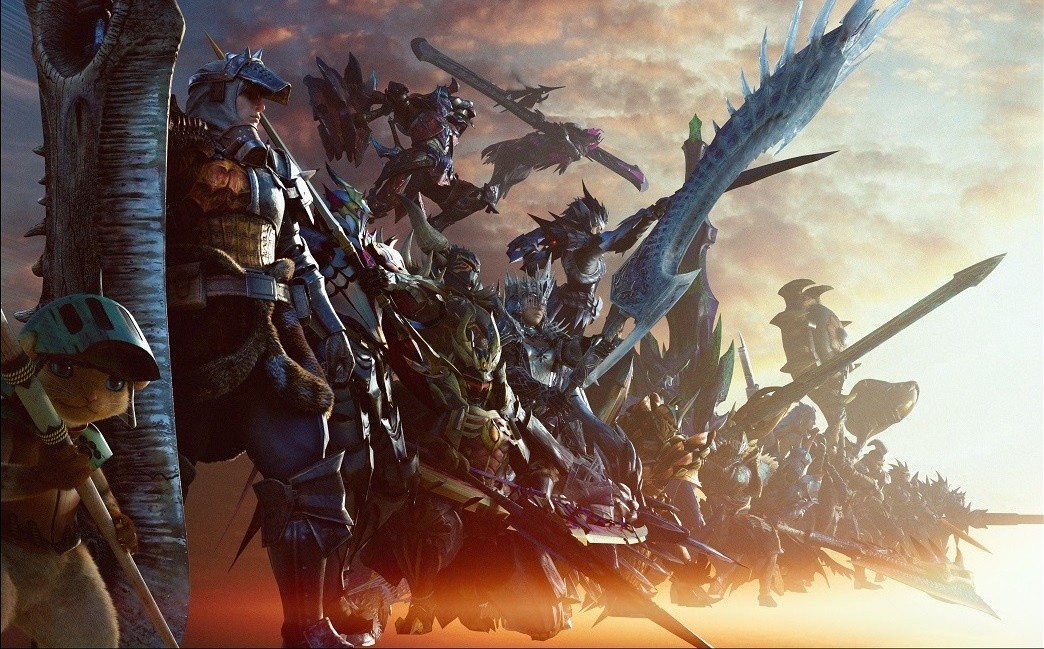
If you ask me what draws me to Monster Hunter - what really draws me, past the hunts and the grind and the loop - it’s two things. Fashion first. Always fashion. The way you can take a bunch of mismatched armor pieces and turn your hunter into something that looks like it belongs on a runway instead of a battlefield. That’s my number one.
But right behind it? MADs. GMVs. Whatever you want to call them - those lovingly edited music videos where someone takes their best gameplay footage, picks the perfect song, and turns a Rathalos hunt into a cinematic experience. Those videos that make you feel something. That make you want to pick up a weapon you’ve never touched and go fight something you’ve been avoiding.
And they’re gone.
Not gone-gone. You can still find them if you dig. There’s even a community-driven playlist with over 2,000 videos collected over the years. But the scene? The community of people creating them? The culture that produced them? That died somewhere between Generations Ultimate and World. And nobody really talks about it.
So let’s talk about it.
What Even Is a MAD?
If you came into Monster Hunter through World or later, there’s a good chance you’ve never seen one. And that’s part of the problem.
MAD stands for Music Anime Douga - basically a Japanese tradition of fan-edited music videos. In the Monster Hunter world, these were 3-5 minute videos where editors would sync gameplay footage to music. Not just random clips over a song. I mean real editing. Beat-synced cuts. Camera angles timed to drops. A Great Sword level 3 charge connecting on the exact downbeat of a chorus. Part breaks matching cymbal crashes. Slow-motion dodges into guitar solos.
The Japanese scene on NicoNico Douga was massive. They had whole categories - combat showcase MADs, weapon catalog videos showing every move a weapon could do in style, and guild PVs where hunting groups made cinematic team introductions. The music choices alone told you everything about the culture: JAM Project, Rhapsody of Fire, Vocaloid tracks. Power metal and anime openings. Maximum dramatic energy.
On the Western side, people called them GMVs - Game Music Videos. Same concept, different name. The scene was smaller but it existed. Some absolute gems came out of the MH3U, MH4U, and MHGU eras.
A Japanese blogger named hakujolno captured it perfectly: “Back when I was deeply into MHP2G, dos, MHP3rd, and Tri - at that time, game commentary and streaming wasn’t as popular as it is now. For me, ‘game videos’ meant MADs and god-tier play compilations.”
That’s exactly it. Before the content creator era, before everyone had a face cam and a build guide, this is what Monster Hunter videos were. Art, not content. Expression, not optimization.
The Golden Age Was the Portable Era
The peak of MH MADs wasn’t an accident. It aligned perfectly with the portable era - roughly 2007 to 2017. Monster Hunter Portable 2nd G through Generations Ultimate.
NicoNico Douga’s Monster Hunter MAD tag accumulated over 980 videos. And that’s just what survived. Plenty more got taken down over the years to copyright claims or just creators deleting their accounts. Every major release brought a wave of new MADs. One NicoNico commenter from 2014 noted how the community grew: “In the past, regular MAD creators would upload one-off works, but since P2G through 3rd, more people make new works with each sequel.”
It was a living thing. A tradition. Each new game brought new moves, new monsters, new material to work with - and people would immediately start creating.
MH4U was special because it added mounting. Suddenly you had these dramatic aerial moments to edit around. And then Generations came along and added Hunter Arts and Styles - and the MAD scene went absolutely wild with it. Aerial Style’s continuous mounting attacks. Adept Style with those frame-perfect dodge counters that look insane in slow motion. Valor Style’s powered-up states. These weren’t just fun mechanics. They were cinematic. They were made for highlight reels.
MHGU was the peak. G-Rank difficulty plus every style and art in the game. The footage possibilities were endless.
And then it all stopped.
World Changed the Game - Literally
Monster Hunter World launched in January 2018 and everything shifted.
I want to be clear: World is a good game. I’m not here to trash it. But World changed the community in ways that went way beyond the gameplay.
Capcom openly said they shifted their focus from their domestic audience to the Western market. And it worked - 23 million copies sold. Monster Hunter went from a niche Japanese franchise with a dedicated following to a mainstream Western blockbuster. That’s great for Capcom. But the audience that replaced the old one wanted fundamentally different things.
The new audience wanted builds. Meta analysis. Damage numbers. Optimal sets. Speedrun times. “What’s the best weapon for X monster?” “What’s the fastest clear time?” “What decorations do I need?”
Overnight, the content landscape transformed. Reddit’s r/MonsterHunterMeta became essential reading. HoneyHunter’s build planner became a bookmark. Tutorial creators built empires. The content that thrived was searchable, algorithm-friendly, and practical.
Where does a 4-minute music video fit in that world? It doesn’t.
The mechanical changes made it worse. Capcom officially confirmed that Hunter Arts and Styles wouldn’t be in World. Those flashy, dramatic, stylized moves that gave MAD editors so much to work with? Gone. World’s combat is more grounded. More technical. Excellent for tutorial content. Less suited for the kind of dramatic, music-synchronized editing that defined MADs.
Even the visual aesthetic shifted. World went for realistic environments and cinematic monster introductions, moving away from the anime-like aesthetic of the older games. The raw gameplay became more watchable without heavy editing - but also less conducive to the stylized editing that MADs thrived on. When the base footage already looks like a cutscene, there’s less need to make it into one.
NicoNico Died and Took the Japanese Scene With It
Here’s something the Western community doesn’t talk about enough: the Japanese MAD scene didn’t just decline because of Monster Hunter changes. It declined because its home died.
According to MoneyPost’s reporting, NicoNico Douga’s premium membership peaked at 2.56 million in September 2016. By 2025, it was down to 1.08 million. Active users went from 8.68 million at peak to roughly 4.55 million. That’s not a slow decline. That’s a platform in freefall.
NicoNico didn’t support 1080p video until 2018 - nearly a decade after YouTube. Monetization came years late. Copyright enforcement got stricter, making MAD uploads risky. The younger generation moved to YouTube, Twitter, and TikTok. The people who made MADs either stopped or had nowhere to put them.
A 2019 Togetter thread titled “Opinions on the End of NicoNico and MAD Culture Survival” is genuinely sad to read. One user said: “The drastic decline of young people owning PCs and the widespread recognition that video creation equals money-making” killed the hobbyist spirit. Another asked: “Since I stopped going to NicoNico, I stopped watching MADs entirely. Do people even post those on YouTube?” The answer was essentially: “They exist, but they get deleted easily, and there doesn’t seem to be as much demand.”
The entire ecosystem - the platform, the community, the culture of watching MADs and leaving comments and sharing favorites - evaporated. And with it went the infrastructure that Monster Hunter MAD creators depended on.
The Algorithm Killed What Was Left
Even if the community and platforms hadn’t shifted, the economics would have killed MADs anyway.
YouTube’s algorithm changes around 2018 massively disadvantaged short creative content. Watch time became everything. A 3-minute GMV synced to a perfect song is algorithmically worthless compared to a 12-minute build guide with mid-roll ads. YouTube only allowed mid-roll ads on videos 8 minutes or longer. So every incentive pushed creators toward longer, not better.
And then there’s copyright. Music-heavy content is a copyright strike waiting to happen. A GMV is literally built on copyrighted music. One Content ID match and your video is either muted, demonetized, or taken down.
So the math is simple: spend 40 hours editing a 4-minute MAD that earns nothing and might get deleted, or spend the same time making build guides that generate actual income. Not a hard choice if you’re trying to make content creation sustainable.
The passion-project era of video creation - making something because you wanted to, not because the algorithm would reward you - didn’t survive contact with the attention economy.
Rise Couldn’t Fix It. Wilds Won’t Either.
When Monster Hunter Rise came out in 2021, it introduced Wirebugs and Silkbind attacks. Flashy, aerial mechanics. Visually dramatic. Theoretically perfect for GMV content.
No revival happened.
The infrastructure was already gone. NicoNico was too far gone. YouTube’s algorithm still punished short creative content. The community expectation had shifted. People wanted combo guides and tech tutorials, not artistic montages. And by then, AI-powered clipping tools like Eklipse were auto-generating “epic moments” - eliminating the artisan editing process in favor of automated content.
Monster Hunter Wilds sold 8 million copies in three days. Became Capcom’s fastest-selling title. Capcom has an official “Authorized Streamer” program now. The content ecosystem is streaming and guide-focused. Searches for “モンハンワイルズ MAD” return basically nothing.
The culture isn’t coming back through market forces. The algorithm won’t suddenly reward 4-minute music videos over 15-minute build guides. NicoNico isn’t going to un-die. The new audience isn’t going to spontaneously develop nostalgia for something they never experienced.
This Happened Everywhere, Not Just Monster Hunter
I wish this was a Monster Hunter-specific problem. It’s not.
The Devil May Cry community had one of the most incredible combo MAD traditions ever. A creator named donguri990 made videos that still give me chills - frame-perfect combo sequences edited to music in ways that made the combat system look like a choreographed dance. But even donguri eventually released a “final combo MAD.” The difference is that DMC’s style meter system inherently rewards creative expression, so the tradition survived slightly longer. In Monster Hunter, the combat loop isn’t about style - it’s about efficiency. The games never had a built-in reason to look cool.
The Soulsborne community never really had a GMV tradition. Their creative content went toward lore analysis and challenge runs. Different outlet, same underlying shift: from artistic expression to informational content.
Short-form content on TikTok and YouTube Shorts is sometimes called the evolution of this tradition. I disagree. A 15-second clip auto-generated from a stream is not the same thing as a hand-edited 4-minute video where every cut is intentional and every beat lands. One is content. The other was craft.
I’m Not Ready to Let It Go
Here’s the personal part.
There’s a community-driven playlist on YouTube - maintained by Li’sar - with over 2,000 Monster Hunter MADs. They posted about it on Reddit asking for help finding more videos, because so many of these things are buried with barely any views. Japanese MADs from the MHP2G era through MHGU. Western GMVs from creators who have long since moved on or deleted their channels. Some of these videos have views in the double digits. Some of them are the best gaming content I’ve ever seen.
People on MHOldschool.com actively archive pre-2009 Monster Hunter media like it’s archaeology. We’re all doing the same thing - preserving something that the community has largely forgotten existed.
But I don’t just want to preserve. I want to create.
I’ve made some GMVs myself. They’re not going to compete with the legends of the NicoNico golden age. But every time I sit down to edit footage to music - to find that perfect moment where a Greatsword connects and the track hits its peak - I feel something that watching a build guide has never given me. It’s the same feeling that got me into Monster Hunter in the first place. Not optimization. Not efficiency. Expression.
I also maintain my own MAD playlist - a personal collection of favorites I’ve gathered over the years.
Fashion first. MADs second. These are the two things that keep me coming back to Monster Hunter when the meta discussions and damage number debates make me want to close every tab and go do something else. They’re both forms of the same impulse: making something beautiful out of a game that most people only see as a system to be optimized.
I want to make more. I want to keep the tradition alive even if nobody’s watching. Because the point was never views or revenue. The point was taking something you love and turning it into something that makes someone else feel what you feel.
What Actually Changed
If I had to boil it down, the shift from MADs to meta content wasn’t one thing. It was everything changing at once.
The platform died. NicoNico collapsed and took the Japanese MAD ecosystem with it. Nothing replaced it for this specific kind of content.
The game changed. Hunter Arts and Styles - the most visually expressive mechanics Monster Hunter ever had - were removed. The combat became more grounded, more technical, less cinematic.
The audience changed. 23 million new players came in through World. They wanted practical content. Builds. Guides. Optimization. They didn’t know what they were missing because they never experienced what came before.
The economics changed. YouTube’s algorithm punished short creative content and rewarded long informational videos. Music-based content became a copyright liability. Creating MADs went from unrewarded to actively penalized.
The culture changed. Video creation went from a hobby to a career. “Content” replaced “art.” Efficiency replaced expression. The hobbyist MAD creator editing footage on their PC to share for community appreciation was replaced by the professional content creator optimizing video length for ad revenue.
One Japanese community member put it in a way that stuck with me: “It’s not just ‘it dies because there’s no money in it’ - it’s more that ’the voices of uninteresting people got louder.’” Harsh, but there’s truth in it. The structural changes didn’t just reduce GMV creation. They made it culturally invisible. The new Monster Hunter community doesn’t know what it’s missing.
A Different Internet, a Different Monster Hunter
The MAD tradition belongs to a different era of the internet. An era when gaming content was created for community appreciation rather than algorithmic optimization. When platforms enabled niche creative cultures instead of homogenizing everything toward engagement metrics. When the line between creator and audience was thin enough that watching a spectacular Hammer compilation might inspire you to open your editing software and make your own.
That era didn’t end with a dramatic death. It just quietly migrated - players to new platforms, creators to sustainable content types, attention to algorithmic feeds. That 2,000+ video playlist isn’t just a collection. It’s an archive of a different relationship between a game and the people who loved it.
I don’t know if that relationship can come back at scale. Probably not. The algorithm doesn’t care about your perfectly synced cut. YouTube won’t promote your 4-minute video over a 15-minute build guide. Capcom’s “Authorized Streamer” program isn’t looking for MAD editors.
But I’m going to keep making them anyway. And if you’ve read this far, maybe you’ll watch them. Maybe you’ll feel something. Maybe you’ll open your own editing software.
The quest was always optional. The art was the point.
Sources -24 references
- モンハンMAD - NicoNico Encyclopedia (ニコニコ大百科) - The definitive tag page documenting the Monster Hunter MAD tradition on NicoNico Douga, including content categories, creator history, and community commentary dating back to the peak era.
- 今見ても痺れるモンハンMAD - Hatenablog - A 2023 Japanese blog post reflecting on classic MH MADs and the era when “game videos meant MADs and god-tier play compilations.”
- ニコニコの終わりとMAD文化の存続についての意見のまとめ - Togetter - A compiled thread of Japanese opinions on the end of NicoNico and whether MAD culture can survive the platform’s decline.
- 過疎化が深刻といわれる「ニコニコ動画」の現在地 - MoneyPost - Reporting on NicoNico Douga’s depopulation, with user numbers dropping from peak to roughly half.
- ニコニコ動画が衰退した理由がヤバすぎる - Game Jikkyousha Sokuhou - Community discussion on the reasons behind NicoNico’s decline.
- ニコニコ動画が衰退した理由 - Nanjgod - Additional Japanese community perspectives on why NicoNico fell behind.
- ニコニコ動画衰退の歴史 - Note.com - A detailed timeline of NicoNico Douga’s decline.
- ニコニコ動画はなぜ衰退したのか - Animanch - Forum thread analyzing NicoNico’s decline from multiple angles.
- ゲーム用語/ニコニコ動画 - Monster Hunter Dictionary Wiki - Wiki entry on NicoNico’s role in Monster Hunter community culture.
- Monster Hunter: Transition to the West - Evergreen State College Blog - Academic analysis of Monster Hunter’s shift from Japanese domestic audience to Western mainstream.
- Monster Hunter World Won’t Have Hunter Styles or Arts - DualShockers - Capcom’s official confirmation that Hunter Arts and Styles would not return in World.
- Monster Hunter: World - Wikipedia - Sales data and overview of World’s impact on the franchise.
- How the YouTube Algorithm Works - Hootsuite - Analysis of YouTube’s watch-time driven algorithm and its impact on short-form creative content.
- Devil May Cry in its Ultimate Form: donguri990 and his Combo MAD Videos - Sabukaru - Profile of legendary DMC combo MAD creator donguri990, providing cross-community context for the MAD tradition.
- Anime Music Video - Wikipedia - Background on the AMV/MAD tradition and its cultural roots.
- [MEGATHREAD] Old Monster Hunter Media - MH Oldschool - Community effort to preserve pre-2009 Monster Hunter media including early MADs and gameplay videos.
- [En attendant WILDS] Compilation de plus de 2000 MAD Monster Hunter - JeuxVideo.com - A French community member’s compilation of 2,000+ Monster Hunter MADs.
- Monster Hunter Wilds Roars Past 8 Million Units Sold - Capcom IR - Official Capcom press release on Wilds sales figures.
- Monster Hunter Community Discussions - Steam - Steam community threads discussing the cultural shift in Monster Hunter’s player base post-World.
- I Don’t Like the Direction This Series Has Taken - Steam Wilds Discussions - Veteran player perspectives on the series direction through Wilds.
- Li’sar’s Monster Hunter MAD Archive - YouTube - Community-driven collection of 2,000+ Monster Hunter MADs and GMVs, spanning from the MHP2G era to present.
- Gigantic MAD/AMV/GMV Editing Playlist - Reddit - Li’sar’s Reddit thread asking the community for help finding more MADs to add to the archive.
- My Monster Hunter MAD Playlist - YouTube - My personal collection of favorite Monster Hunter MADs.
- My Monster Hunter GMVs - YouTube - GMVs I’ve created.
Comments