There was a time, and it wasn't even that long ago, when you played a game because you wanted to be inside it. You loaded it up after dinner with no plan to make anything of it. No clip. No build guide. No tier list. No verdict. You just wanted to see what was over the next hill, and that was the whole reason, and it was enough.
I keep thinking about that, because I'm not sure we know how to do it anymore.
I've been watching the conversation around Where Winds Meet curdle over the past few weeks, and it's a good lens for this because the game itself isn't the problem. The latest example is a long, articulate video from a creator with fifteen hundred hours in the game. Whatever else I think of it, it's not lazy, he clearly knows the systems and he's upfront about his own bias. His conclusion is that the game wants to be casual, that it was never going to be the competitive machine he hoped for, and that the honest move is to lower your expectations and move on.
And I sat with that for a while, because something about it made me sad in a way I couldn't place at first. It took me a bit to understand what it was. It wasn't that he was wrong about the game's flaws. It's that fifteen hundred hours of being inside a world had been quietly converted, the whole time, into a job he was now resigning from. Not play. Work. A position he held, and was stepping down from, with a severance video.
That's the thing I want to talk about. Not this game. Us.
When did playing become farming
Somewhere in the last decade, the relationship flipped. We stopped consuming games and started processing them. Every new release arrives and the first question isn't "is this beautiful, is this fun, do I want to live here for a while." The first question is "what is this for me." Can I make content out of it. Can I climb something with it. Can I optimize it. Is there a meta. Is there a grind worth grinding. Is it, in some accounting we never quite say out loud, worth my time, where time has become a currency we expect a return on.
That's not how you love something. That's how you audit it.
And it's not only the creators, though they feel it the hardest because their rent depends on it. It's all of us now. We've absorbed the creator brain by osmosis. We watch a launch and immediately start tracking player counts like analysts. We talk about whether a game "has legs," whether it's "dead," whether it "respects our time," as if the time we spend enjoying ourselves is a cost to be minimized rather than the entire point. We turned our hobby into a spreadsheet and then got upset when it stopped feeling like a hobby.
The creators are trapped, and the trap is real
I want to be fair, because this part isn't a villain story. The creators who strip-mine a game for every drop of monetizable content aren't cackling. They're surviving inside a machine that pays them to.
The incentives are brutally simple. A worried thumbnail with a downward player-count graph and the word "DYING" will always outperform a quiet video about a questline that moved you. "Is this game dead" is a guaranteed click. "Here's something beautiful I found" is a gamble. So the machine selects, ruthlessly, for the first kind. A creator who wants to keep the lights on learns this fast, and the learning bends them away from the thing that made them start a channel in the first place, which was, almost always, that they loved games.
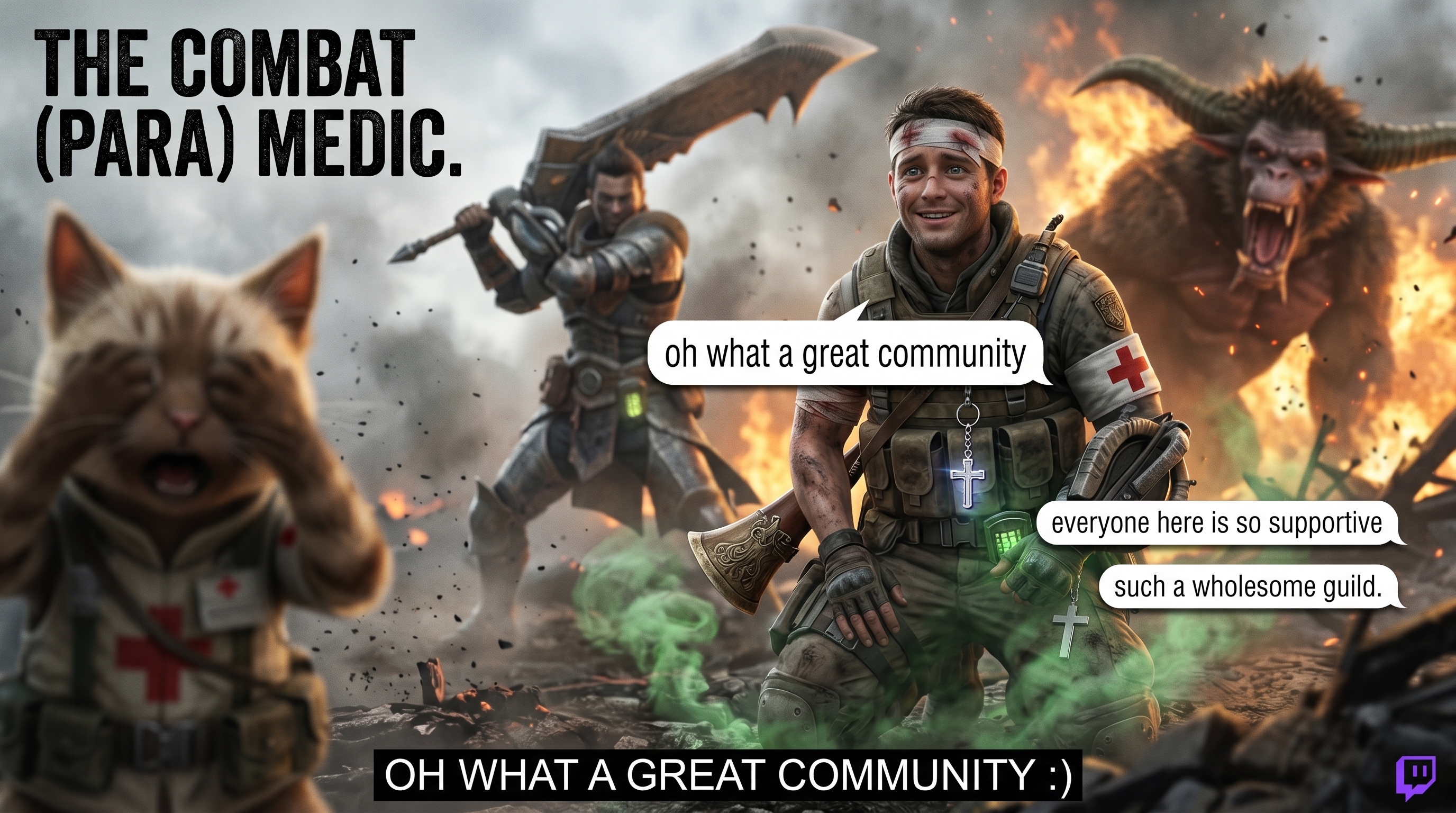
So the arc becomes predictable. Discover a game, love it, mine it, exhaust it, and then, right on schedule, when the views dip and the well runs dry, pivot to the eulogy. The "state of." The "should you quit." The "what went wrong." Not out of malice. Out of necessity. The last video about almost any game is its obituary, and the obituary is just content too.
There was a smaller, uglier version of this around Where Winds Meet that even that same video flagged: creators who found that face-customization clips printed money and so churned out hundreds of near-identical ones, draining a real budget for an empty trick. That's the disease in its most naked form. The game became a vending machine, and the only question anyone asked it was how to make it dispense faster.
The other half: we decide what a game is, then resent it
If the creators forgot how to love games for money, the rest of us forgot for a stranger reason. We started deciding, in advance, what a game was supposed to be, and then holding it in contempt for being something else.
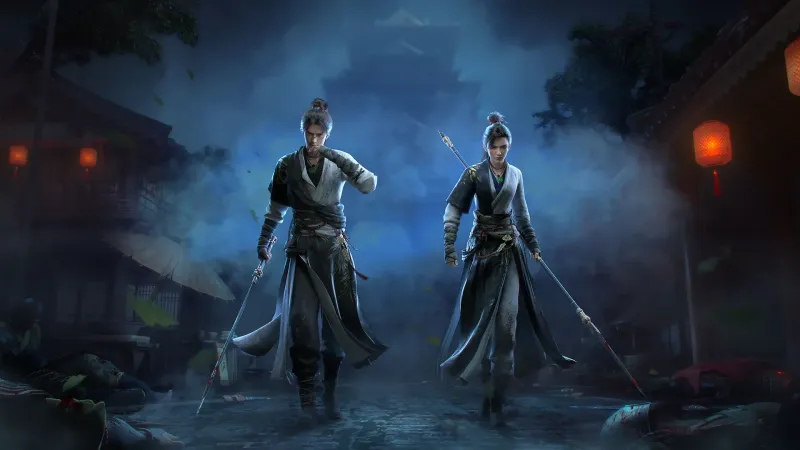
Here's where the specifics matter, because this is exactly what happened to Where Winds Meet. Go back and look at how it was actually sold. The studio's whole stated thesis, from the first Gamescom reveal, was freedom and exploration, wind as a symbol of freedom, harmony, wandering. The official site pitches an open-world adventure about uncovering forgotten truths and your own identity. NetEase's launch announcement leads with the world: the first original wuxia open-world ARPG, over twenty regions, more than ten thousand NPCs living their own lives. Every trailer sold biomes, traversal, a Ghost of Tsushima reverie. Not Sekiro's boss rush. Not a ranked ladder.
PvP was in there. It was one line, near the bottom, after the hundred-and-fifty-plus hours of narrative exploration, after the solo-or-co-op pitch, after the freedom to be a doctor or a merchant or a wandering healer. A single sentence. The casual, gentle, life-skill layer, cooking, fishing, calligraphy, playing instruments, got more billing than competition ever did. The trailers had Shiba Inu puppets playing mahjong, for heaven's sake.
So when someone arrives expecting a competitive esport, plays for fifteen hundred hours, and walks away disappointed it never became one, the game didn't betray them. It never promised that. The expectation was carried in from outside and pressed onto a thing that was, the entire time, asking only to be wandered through. And this is the part that aches: it's a game built to be loved slowly. Tang dynasty poetry tucked into item descriptions. Side quests that are quiet little lessons in philosophy. A blacksmith questline that walks you through the actual metallurgy of the period. A studio openly trying to preserve a sliver of history most of us would otherwise never touch. And the loudest conversation around it was can I DPS, are the combos true on Global, why is there no ranked.
You can walk through a cathedral asking only where the gift shop is. You'll find your answer. You'll also have missed the entire reason the building exists.
What we actually lost
I don't think the problem is that we got more critical. Criticism is good. I've been hard on this game's broken servers, its glacial patch cadence, its habit of shipping bugs to the West that China already fixed, and I'll be hard on those again, because they're real and they deserve it. Loving something doesn't mean going quiet about its faults.
The loss is subtler than that. It's that we let the language of work colonize the one place that was supposed to be free of it. "Worth your time." "Respects your time." "What's the endgame loop." "Is there enough content." Listen to how we talk. We sound like managers reviewing a vendor. Somewhere in there, the simple animal pleasure of messing around in an imaginary place got crowded out by the need for every hour to justify itself on a ledger.
And the cruelest joke is that it doesn't even make us happier. The person who farms a game for fifteen hundred hours and then declares it a disappointment didn't have fifteen hundred hours of joy soured at the end. They had, by their own account, work the whole way through, propped up by the hope of a payoff that was never the point. Meanwhile the player who climbed a mountain in that same game just to watch the wind move through the grass, and then logged off, got the actual thing. The whole thing. For free. In an afternoon.
How we love them again
I don't have a program for this. It's not a five-step listicle, and if it were, that would sort of prove the point.
But I think it starts with letting a game be the thing it is instead of the thing you wish it were. Meeting it on its own terms. Asking what it's trying to be and whether it's good at that, rather than measuring it against a template every release is supposed to fit. It means being willing, sometimes, to just play, with no intention of producing anything, proving anything, or extracting anything. To let an evening in a game be as unjustified and complete as an evening with a good book or a long walk. Nobody asks what the endgame loop of a sunset is.
For the creators, I know it's harder, because the machine is real and the rent is real. But I think the audience is quietly starving for the other kind of video, the one made by someone who clearly still loves the medium and isn't performing alarm for the algorithm. I think that hunger is bigger than the metrics suggest, because the metrics only measure what already exists.
Where Winds Meet isn't dead. It's flawed, and badly run in places, and it's also one of the most lovingly built worlds I've spent time in, and both of those are true at once, and neither requires a verdict. It just requires showing up and being there.
We forgot how to do that. The good news about forgetting is that it's not the same as losing. You can remember. You can load something up tonight with no plan, no clip, no spreadsheet, and go see what's over the next hill.
That used to be enough. It still is. We're just out of practice.

No comments yet. Be the first to share your thoughts!