One Stream, Two Audio Mixes
How I use OBS direct application capture alongside Windows Mixer and Voicemeeter to keep my stream mix separate from what I hear.
READ ↗
The loudest argument about generative AI is usually presented as a battle between artists and machines. On one side, we are told, stand human creativity, years of practice, and authentic expression. On the other side stand algorithms, corporations, theft, and people who want a shortcut.
I understand why artists tell the story this way. Generative AI can threaten their income. Training data raises serious questions about consent, attribution, and compensation. Companies are eager to reduce costs, and some will replace paid creative work with generated images whenever they can. Those concerns are real.
I should be upfront about my position: at this point, I consider myself an AI-assisted musician and visual artist. I am proud of what I create, but I also understand why people like me receive hostility from traditional artists.
I have a regular job that I love, yet I have always wanted another way to express myself. This did not begin with generative AI. I learned acoustic guitar in primary school. In high school, my friends and I experimented with Fruity Loops, Reason, Cubase, eJay Hip Hop, and whatever other creative software we could access. Throughout my life, I kept returning to music and art, learning in fragments without ever developing the thousands of hours of technical mastery expected from a professional artist.
AI finally gave me tools that let me turn ideas into something I could share.
Yes, it is a shortcut. I will not pretend that prompting a model is equivalent to mastering an instrument, drawing anatomy, or studying composition for a decade. But "shortcut" does not mean that the creative process disappears. I still begin with an idea, make choices, reject results, revise direction, and sometimes spend significant money generating work that never becomes usable. The process has its own frustrations, limitations, and skills.
None of that entitles me to the same technical credit as somebody who painted every stroke or performed every note. It does mean that I am trying to express something rather than flooding the internet with disposable slop. The tool helps me cross a technical barrier that had prevented me from fully expressing ideas I had carried for years.
That is why I understand both sides of this conflict. I understand why trained artists see people like me as competitors who skipped the hardest part. I also know that using AI does not automatically make my intention fraudulent, lazy, or empty.
But I do not think the popular story is complete.
When I look at the anti-AI discourse on platforms such as X, I often do not see a defense of art in the grand sense of the word. I see participants in an online image economy defending their position in that economy. A noticeable part of this world is built around derivative fan art, familiar anime aesthetics, sexualized characters, and commissions based on intellectual property created by somebody else.
That does not make the people producing it untalented. It does not mean their work requires no effort. It does, however, make the moral picture more complicated than "real artists versus thieves."
The argument against AI often relies on a romantic image of the artist: an original visionary who creates because they must express something true. Picasso and Leonardo da Vinci become the implied standard, even when nobody names them.
Most working artists have never lived like that. Leonardo worked for patrons. Renaissance workshops repeated established forms. Painters, illustrators, musicians, and writers have always accepted commissions and adapted their work to the demands of whoever paid them.
Making art for money does not disqualify somebody from being an artist. If it did, much of art history would disappear.
The problem begins when commercial image production is presented as morally pure simply because a human made it. Drawing a popular game character in a fashionable style for an audience that already loves that character may involve skill, but it is still market-oriented production. It can be personal expression, a service, fan participation, advertising for one's commission business, or all of these at once.
We should be honest about that.
Fan art can be transformative. Artists reinterpret characters, combine influences, and develop recognizable styles. Communities form around this work, and many young artists learn through imitation before creating something more personal.
At the same time, commercial fan art often depends on an existing franchise doing most of the audience-building. A Genshin Impact character arrives with a design, personality, story, and millions of potential viewers already attached. The illustrator contributes execution and interpretation, but the underlying cultural object belongs to somebody else.
This does not automatically make commercial fan art unethical. Rights holders frequently tolerate or encourage it because it strengthens the fandom. But it should make us skeptical of absolute claims about originality and ownership. It is difficult to argue that every visual influence belongs exclusively to an individual artist while earning money through characters and visual languages developed by other people.
The legal and ethical questions surrounding AI training are not identical to the questions surrounding fan art. They should not be treated as identical. The comparison still reveals an inconsistency: online creative culture has long depended on borrowing, imitation, tolerated infringement, and shared visual conventions. AI did not invent that ambiguity. It made the ambiguity impossible to ignore.
Another uncomfortable part of the conversation is the role of sexualized commissions.
Adult erotic art is a legitimate form of expression and paid work. Its existence does not prove that an artist lacks principles. People need income, and demand shapes every commercial market.
But demand also tells us what kind of economy we are discussing. Some online illustrators are not primarily being paid to pursue a personal artistic vision. They are being paid to satisfy highly specific consumer fantasies using popular characters and recognizable aesthetics. The more provocative the image, the more attention it may receive. Platform algorithms, fandom demand, and commission prices can all push creators toward increasingly sexualized material.
That creates a difficult question: when somebody says they are defending art from AI, are they defending human culture and creative dignity, or are they defending a market niche that currently pays them?
The answer can be both. A person can care deeply about craft while also protecting their income. My criticism is not that artists need to make bread. We all do. My criticism is that economic self-interest is often dressed in the language of artistic sanctity.
There is also a boundary that should not be blurred. Consensual adult erotic art is not the same category as sexual material involving minors or characters depicted as minors. The latter raises distinct and serious ethical questions, and potentially legal ones depending on the jurisdiction and the material. Throwing all explicit art into one category would be inaccurate. Pretending the troubling edge of this market does not exist would also be dishonest.
Any strong claim about how common such material is needs evidence rather than impressions from a personalized social media feed. The strongest relevant data I found comes from Pixiv, not X, and it does not identify the political opinions of the artists involved. A 2024 ACM study examined 15.2 million Pixiv uploads made from January 2022 through early January 2024. It found that restricted adult works accounted for roughly 20 percent of monthly uploads before the arrival of widely used image generators, then rose above 30 percent. By December 2023, AI-generated works made up more than half of the platform's R-18 uploads.[1] This establishes that adult material is a substantial part of one major anime-oriented art platform. It does not prove that most anti-AI artists make erotic commissions.
Evidence about youthful fictional characters is even less suitable for a sweeping prevalence claim. A 2022 peer-reviewed study analyzed discussion of sexualized minors in hentai and deepfakes, but its dataset was Reddit commentary rather than a representative sample of artwork.[2] Pixiv's own rules explicitly address sexual exploitation or abuse of minors in both posted works and paid Requests, showing that platforms must moderate the category.[3] A policy's existence, however, does not tell us how often violations occur. I therefore cannot responsibly support the claim that "a lot" of anti-AI artists sell this material. The narrower and supportable point is that adult content has a meaningful place in the anime-art economy, while its most troubling edge exists but is poorly quantified.
My first emotional reaction is to say that many of these people are not real artists. I understand the appeal of that judgment, especially when somebody producing repetitive franchise commissions speaks as if they are the sole guardian of human creativity.
But "real artist" is a bad test.
Art is not a professional license. There is no neutral authority that can revoke the title because a person's work is derivative, commercial, erotic, mediocre, or made for an algorithm. Excluding people from the category avoids the harder argument.
The better questions are:
These questions can be applied to both commissioned illustration and generative AI. The answers will not always favor AI. They will not always favor the human illustrator either.
Criticizing hypocrisy among artists does not excuse every use of generative AI.
AI companies should be challenged about the provenance of training data. Creators deserve clear information about how platforms use uploaded work. Customers should not be deceived about whether an image was drawn, generated, or heavily assisted. Living artists should have practical protections against impersonation and deliberate attempts to substitute for their identifiable work.
There are also differences between learning from a broad visual culture and prompting a system to imitate a specific living illustrator. The second act can be legal in some places while still being exploitative or dishonest.
The point is not that AI users are innocent and artists are hypocrites. The point is that neither side owns moral purity.
Both human commission markets and AI image markets respond to demand. Both can reward imitation. Both can exploit the work of others. Both can produce meaningful images, disposable content, pornography, propaganda, or fraud. Human involvement does not automatically make an image ethical. Machine involvement does not automatically make it worthless.
The current conflict is partly philosophical, but it is also a labor dispute.
Illustrators spent years developing skills that used to be scarce. Generative tools reduce the market value of some applications of those skills. People whose income is threatened naturally resist that change. Calling this economic self-defense is not an insult. Workers are allowed to defend their livelihoods.
What I reject is the attempt to transform every threatened commercial practice into sacred culture.
If your business is drawing commissioned fan art, say that clearly and defend it as work. Argue for fair markets, consent, attribution, and bargaining power. Explain what human judgment and collaboration give the customer that a generator cannot. Those are serious arguments.
But do not ask the public to believe that every anime-style commission is a unique monument of human civilization while every generated image is empty theft. That claim cannot survive contact with the actual online image economy.
There is nothing shameful about making bread. There is nothing shameful about accepting commissions or drawing what an audience wants. Commercial artists are workers, and workers deserve dignity.
But dignity does not require mythology.
Some people create because they have something to say. Some create because a customer pays. Most do both in different proportions at different times. The same person can produce a deeply personal work on Monday and a derivative erotic commission on Friday.
The debate would become more honest if we stopped asking who counts as a real artist and started asking what kinds of creative economies we want.
Do we want creators to have meaningful control over their work? Do we want customers to know how images were produced? Do we want companies to disclose and compensate the sources that make their systems valuable? Do we want room for fan culture without pretending intellectual property does not exist? Do we want platforms to take responsibility for sexualized material involving youthful characters? Do we want automation to expand who can communicate visually without destroying every sustainable path for human craft?
Those questions are harder than shouting "artist" or "thief." They are also much closer to the truth.
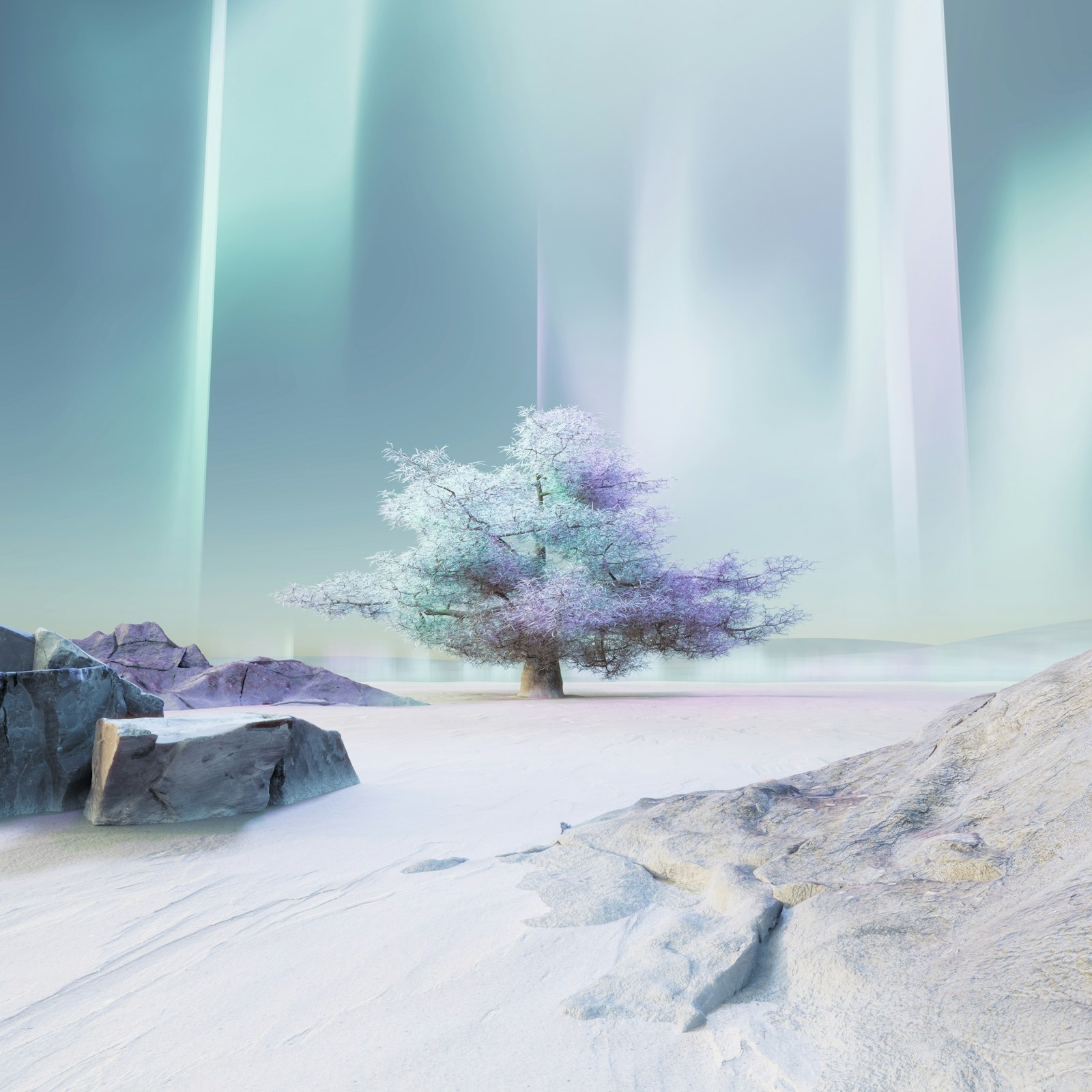
Cover illustration by Linus Zoll for Google DeepMind's Visualising AI project, via Unsplash.
How I use OBS direct application capture alongside Windows Mixer and Voicemeeter to keep my stream mix separate from what I hear.
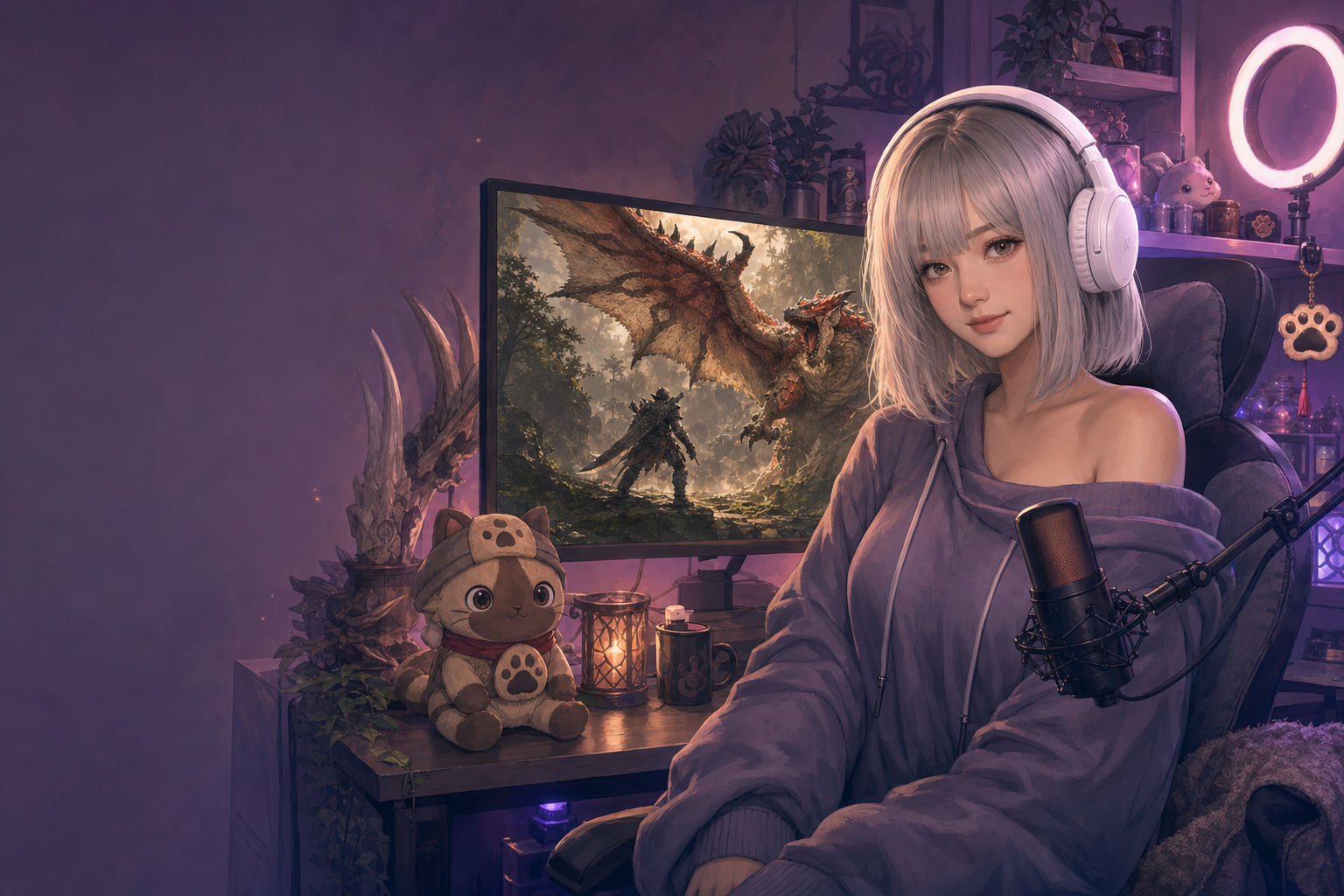
The current-gen Monster Hunter "moral e-girl" streamer runs a sermon and a thirst trap on one feed. A look at the archetype, the incoherence, and the tells.
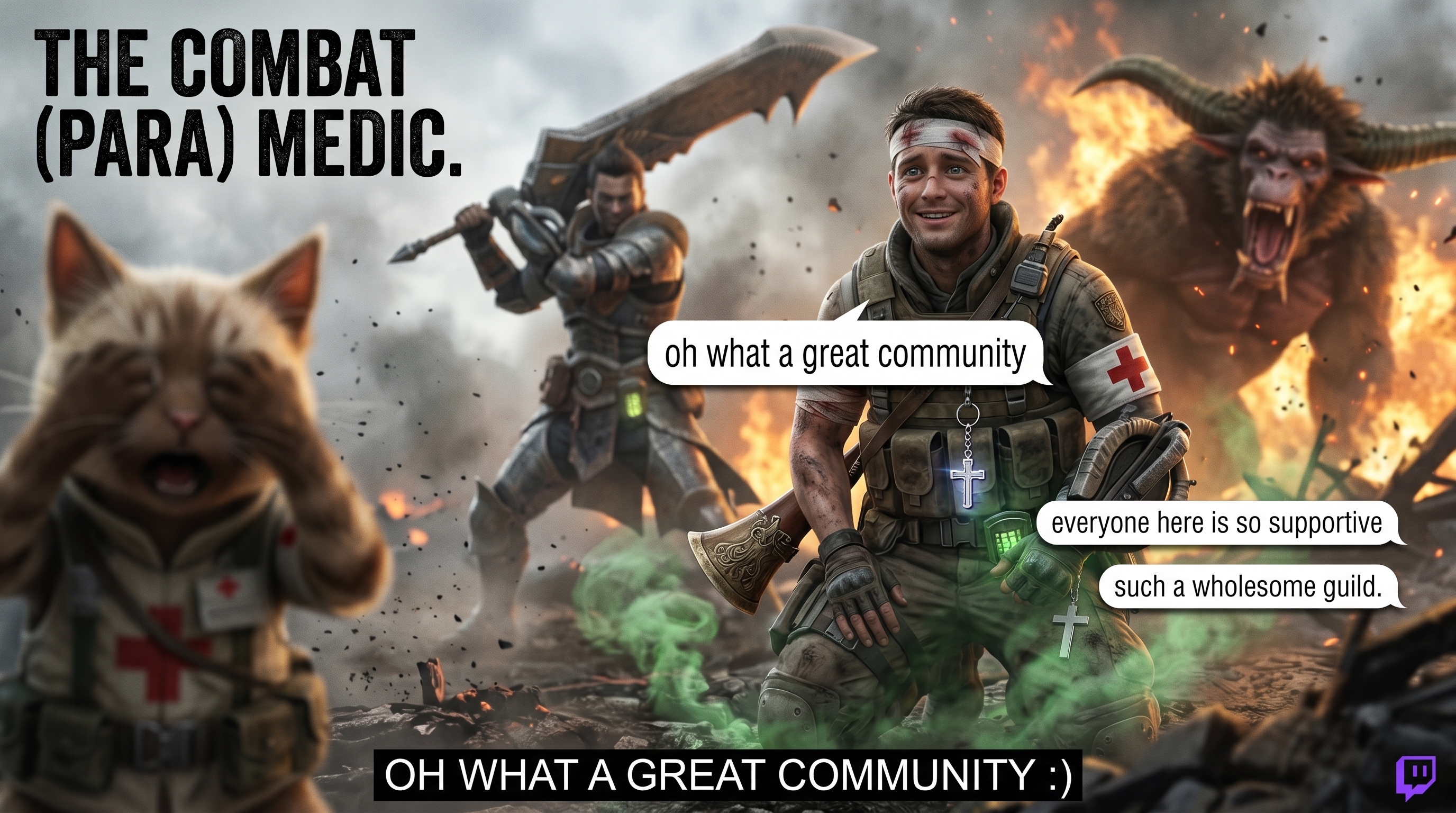
On defending bad apples, fake friendship theater, big talk and small excuses, and why neutrality beats aligned hypocrisy.
No comments yet. Be the first to share your thoughts!